Heat Pump Installation in Clarendon Park, Leicester
MCS-certified air source heat pump installation across Clarendon Park's dense Victorian terrace streets, including the eastern blocks that fall under Stoneygate CA. £7,500 BUS grant supported. Free survey and written quote.
Last reviewed: 21 May 2026
-
£7,500 BUS grant
available toward an MCS-certified heat pump installation in Clarendon Park. Statutory figure — gov.uk Boiler Upgrade Scheme.
-
MCS-certified installation
is required for the BUS grant and to protect manufacturer warranty terms. Every installer in our network is MCS-certified.
-
~3–4× the efficiency of a gas boiler
in typical UK conditions, measured by SCOP across a full heating season. Leicester's design winter temperature is around −3.6°C.
Heat pumps in Clarendon Park — the local context
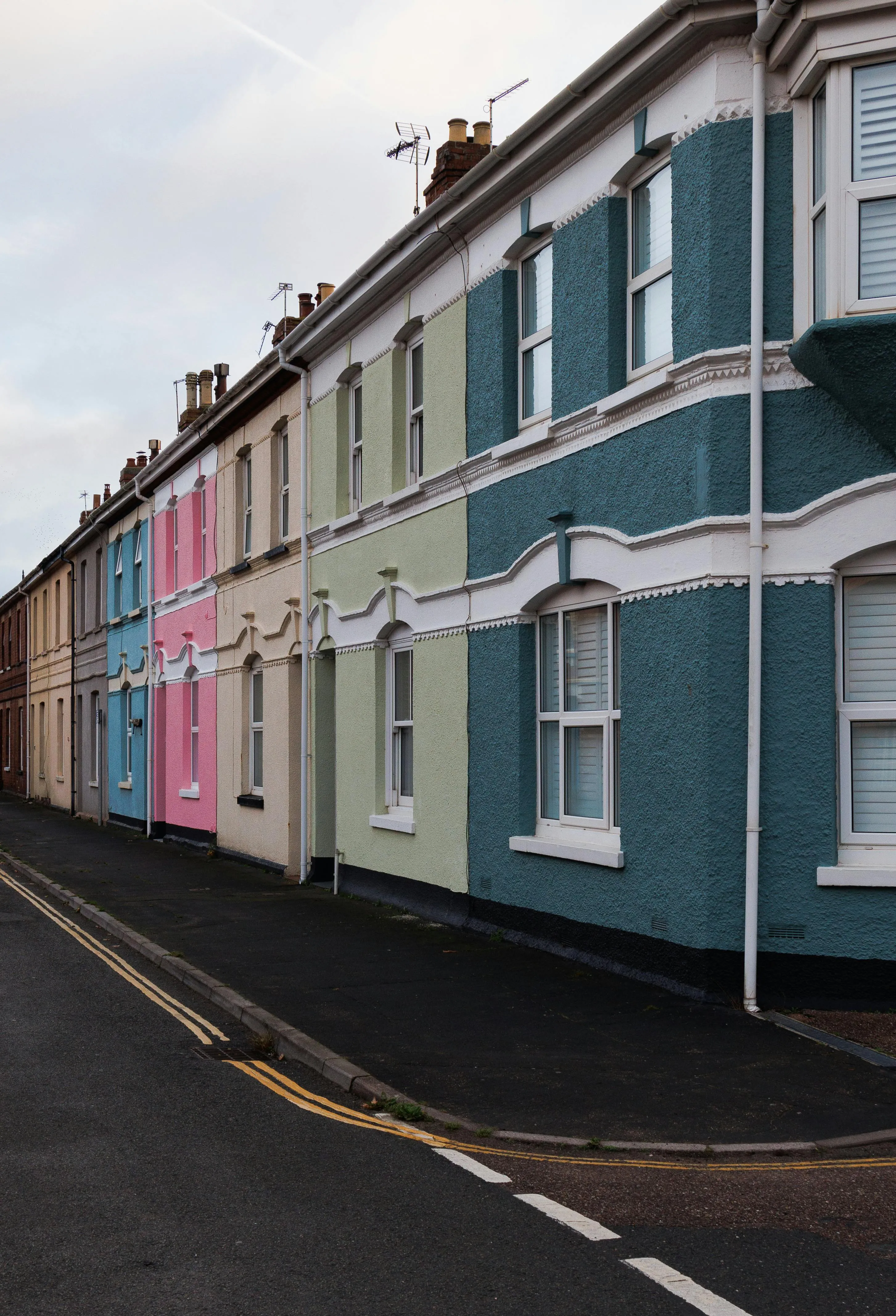
Clarendon Park remained largely undeveloped until the 1870s, when Edward Hartopp Cradock sold 120 acres to developers (the Clarendon Park Company). Streets west of Queen's Road were laid out immediately and developed very quickly by local builders during the 1880s and 1890s, producing the dense Victorian-terrace pattern that defines the area today. Some Edwardian and interwar additions came later, but the overwhelming character is late-Victorian: rough breakdown of 70% pre-1910 Victorian, 20% Edwardian and interwar (1910–1940), and 10% post-1950.
The single biggest planning variable in Clarendon Park is the Stoneygate Conservation Area overlap. Stoneygate CA was designated in 1978 and covers 93 hectares; its boundary on the western side runs along Queens Road and on the southern side along Shirley Road. That puts parts of Clarendon Park — generally the eastern half, but with street-by-street variability — inside the CA. The boundary follows specific street lines rather than radial distance, so two adjacent streets can have different CA status, and per-property verification on the Leicester City Council planning portal is essential before the heat pump survey. Properties inside the CA need conservation-officer consultation before the outdoor unit is sited; properties outside follow standard Permitted Development.
The practical effect on heat pump design follows from the housing-stock pattern. Victorian terraces built between 1880 and 1910 are pre-cavity-wall, solid-brick construction — the walls themselves contribute substantial heat-loss, and the typical retrofit pairs an R290 heat pump (capable of flow temperatures up to 75°C) with a subset of radiator upgrades. Compact rear gardens with party-wall implications on both sides make outdoor unit siting the design constraint most likely to need careful work; the unit usually sits in a rear courtyard, side passage, or at the back of a small garden behind boundary planting.
Solid-wall insulation is the harder conversation alongside the heat pump. BUS grants do not cover fabric improvements; the routes to fabric-first work in Clarendon Park are Leicester City Council's Warm Homes: Local Grant for eligible households, or owner-funded work alongside the heat pump. The choice between internal wall insulation (smaller rooms, paint-grade finish) and external wall insulation (CA constraints on visible elevations make this often impossible inside the Stoneygate CA boundary) is one of the bigger decisions in the wider retrofit.
Clarendon Park has a distinctive tenure mix: a substantial share of properties are student lets (driven by University of Leicester proximity), HMOs, or shared-house lets, alongside owner-occupied and single-rental stock. The BUS grant is available to landlords on privately-rented properties as well as owner-occupiers, but the application process and grant pathway differ by tenure. For multi-occupancy student lets, the route to BUS is usually through the freehold-owning landlord rather than the tenant. The installation specification on HMO properties may emphasise robust commissioning (the property faces high tenant-turnover usage) and clear handover documentation.
Beyond the residential streetscape, Clarendon Park's multicultural worship infrastructure is unusually rich for a Leicester neighbourhood: the Guru Amar Das Gurdwara (opened 1992), Baptist and Methodist churches, Hindu temples, synagogues, and Quaker meeting houses all sit within the area's footprint. None of these directly affect heat pump installations on adjacent residential streets, but they're part of the area's character that gives Clarendon Park its sense of place.
For a Clarendon Park heat pump installation, the practical sequence is: per-property CA boundary check on the LCC planning portal (eastern streets inside, western streets outside, individual variations), free survey, R290 monobloc heat pump sized to the building's solid-wall heat-loss profile (typically 8–11 kW), three to five radiator upgrades on the rooms with the largest exposed wall area, MCS-certified installation under PD or CA planning depending on the boundary status, BUS grant applied by the installer on your behalf, and commissioning. Three to six days on site, plus the CA planning timeline where applicable.
Heat pump services for Clarendon Park
Narrow yards behind the terraces make the noise test the deciding factor; a compact unit at the end of the yard often works. Our service pages explain each stage, and an enquiry through this site goes to one local installer from our network.
Paying for a heat pump in Clarendon Park
If your household income is under £36,000 and your home is rated EPC D to G, Leicester City Council's Warm Homes: Local Grant may pay for a heat pump or insulation in full.
Otherwise, the Boiler Upgrade Scheme takes £7,500 off for any homeowner or private landlord, with no income test. Nearly all Clarendon Park homes are on mains gas, so the £7,500 grant is the relevant one. Details on our costs and grants page.
Estimated cost in Clarendon Park
Clarendon Park heat pump installations typically run £10,000–£13,000 before the £7,500 BUS grant — net £2,500–£5,500. That puts Clarendon Park in the middle-to-upper Leicester range, driven by the dense 1880s–1890s terrace stock built rapidly after Cradock's 120-acre land release.
1880s–1890s terrace heat-loss profile. The Victorian terraces produced by the Clarendon Park Company are pre-cavity-wall solid brick, with bay-windowed front reception rooms and compact rear gardens. An 8–9 kW R290 heat pump is the routine specification — modestly higher hardware cost than R32 but workable at the higher flow temperatures solid-wall terraces need. Mid-terrace properties sit at £10,500–£12,000 gross; end-of-terrace properties with more exposed wall area land slightly higher; smaller two-up-two-down terraces sit slightly lower.
Stoneygate CA overlap on the eastern blocks. The 1978 Stoneygate CA boundary on Queens Road (western edge) and Shirley Road (southern edge) puts a portion of Clarendon Park — generally the eastern half, with street-by-street variability — inside the conservation area. Inside the boundary, conservation-area planning consultation with Leicester City Council usually adds under £250 in fees and one to three weeks on the timeline. Outside the boundary, standard Permitted Development applies. Per-property verification on the LCC planning portal is the first survey step.
Outdoor unit siting on compact rear gardens. The party-wall implications on both sides of a Clarendon Park terrace — and a typical 5–8 metre back garden — make outdoor unit siting the design constraint most likely to need careful work. The MCS 020(a) calculation against the nearest residential window is the binding test where the rear-courtyard option is the only realistic placement. Bay-window radiator upgrades on the front reception room are a routine line item across the area.
HMO and student-let stock. Robust commissioning matters more on properties facing high tenant-turnover usage; clear handover documentation for incoming tenants is part of the installer's scope. Hot water cylinder upgrades are common — many existing cylinders in late-Victorian terraces are undersized for heat pump duty cycles. Solid-wall insulation, if wanted, is owner-funded or covered by Warm Homes funding for eligible households, outside the £7,500 BUS grant; inside the Stoneygate CA, external wall insulation is generally off the table and internal solid-wall insulation is the practical option.
After grant, the typical net Clarendon Park installation sits £2,500–£5,500. The gap to a like-for-like gas boiler swap (£2,500–£4,500) closes further when heat pump lifespan (15–20 years vs 10–15 for gas) and the gas-versus-electricity price trajectory are factored in. Request a quote for a property-specific comparison; the 2026 heat pump cost guide breaks down the cost drivers.
Finding a good installer in Clarendon Park
Check the company on the MCS register: without certification there's no grant. Be wary of cold calls offering free heat pumps; genuine free schemes run through the council.
Planning questions for Clarendon Park go to Leicester City Council. See finding a trustworthy installer and how we select installers.
Heat pump installation in Clarendon Park — FAQ
How long does heat pump installation take in Clarendon Park?
Most installations take three to five days at your home, after the survey and quote. Landlords with student lets often book work for the summer.
Is Clarendon Park a conservation area?
Not in its own right — Clarendon Park does not appear as a standalone Conservation Area in Leicester City Council's 25-CA register. However, parts of Clarendon Park sit within the Stoneygate Conservation Area's boundary. The Stoneygate CA (designated 1978, 93 hectares) runs from Victoria Park Road in the north, Queens Road in the west, Stoneygate Road in the east, and Shirley Road in the south — and that western boundary along Queens Road and the south boundary along Shirley Road put Clarendon Park's eastern blocks inside the CA. Whether your specific Clarendon Park property is in the CA needs a per-address check on the LCC planning portal before the survey; your installer carries out this check as part of pre-installation work.
Are heat pumps suitable for Victorian terraces in Clarendon Park?
Yes — most Clarendon Park Victorian terraces, built between 1880 and 1910, are heat-pump-suitable with the right specification. Two design choices typically apply: an R290 heat pump (capable of higher flow temperatures up to 75°C) to work with the existing radiator sizing in solid-wall properties, and a subset of radiator upgrades on the rooms with the largest exposed wall area. The constraint that defines the Clarendon Park retrofit is outdoor unit siting in a compact rear garden with party-wall implications on both sides — the survey identifies the best location against the MCS 020(a) noise standard at the nearest residential window. Solid-wall insulation is the harder conversation; BUS grants do not cover fabric improvements, so insulation is usually owner-funded or, for eligible households, paid for through Leicester City Council's Warm Homes: Local Grant.
Am I eligible for the £7,500 BUS grant in Clarendon Park?
Most homeowners and private landlords are. The grant is £7,500 with no income test. Lower-income households may qualify for free Warm Homes funding instead.
How much does heat pump installation cost in Clarendon Park?
Roughly £10,000–£13,000 before the grant and £2,500–£5,500 after it. Radiators, the cylinder and any microbore pipework make the biggest difference.
Will my house be inside the Stoneygate Conservation Area?
It depends on the street. The Stoneygate CA's western edge along Queens Road and its southern edge along Shirley Road put parts of Clarendon Park inside the CA — the eastern half of Clarendon Park is more likely to be inside the boundary than the western half. The boundary follows specific street lines rather than radial distance, so two properties on adjacent streets may have different CA status. The Leicester City Council planning portal carries the definitive boundary; the survey starts with that check. Properties inside the CA need a planning consultation before the outdoor unit is sited; properties outside follow standard PD.
Does Clarendon Park's HMO and student-let prevalence affect installations?
It can affect the funding pathway and the installation specification. The Boiler Upgrade Scheme is available to landlords on privately-rented properties (HMOs and single lets both qualify), but the application carries specific landlord-disclosure requirements. The installation specification on HMO properties may emphasise robust commissioning (the property faces high tenant-turnover usage) and clear handover documentation for tenants. Warm Homes funding for insulation covers privately rented as well as owner-occupied homes, subject to income and EPC rules. For multi-occupancy student lets, the route is usually through the freehold-owning landlord rather than the tenant. Your installer's quote works through the tenure-specific considerations.
Will I need new radiators with a heat pump in a Clarendon Park terrace?
Some, most likely. The bay-fronted front room and back bedroom usually need bigger radiators. Larger radiators let the heat pump run at a lower, more efficient temperature.
Get a Clarendon Park heat pump quote
Submit the form on the homepage with your LE2 postcode and a note about your property. We'll route the enquiry to an installer in our network whose coverage of Clarendon Park and brand portfolio fit. The survey is free; the written quote shows the actual figure you'd pay after the £7,500 BUS grant has been deducted, with any required radiator upgrades or hot water cylinder costs included.
Nearby Leicester-area neighbourhoods
- Stoneygate Substantial Victorian villas inside the 1978-designated Stoneygate Conservation Area — LE2 immediately east, with the CA boundary extending into parts of Clarendon Park.
- Knighton 1930s–1940s red-brick semis and a medieval village core anchored by St Mary Magdalen Church — LE2 south of Clarendon Park, no CA overlap.